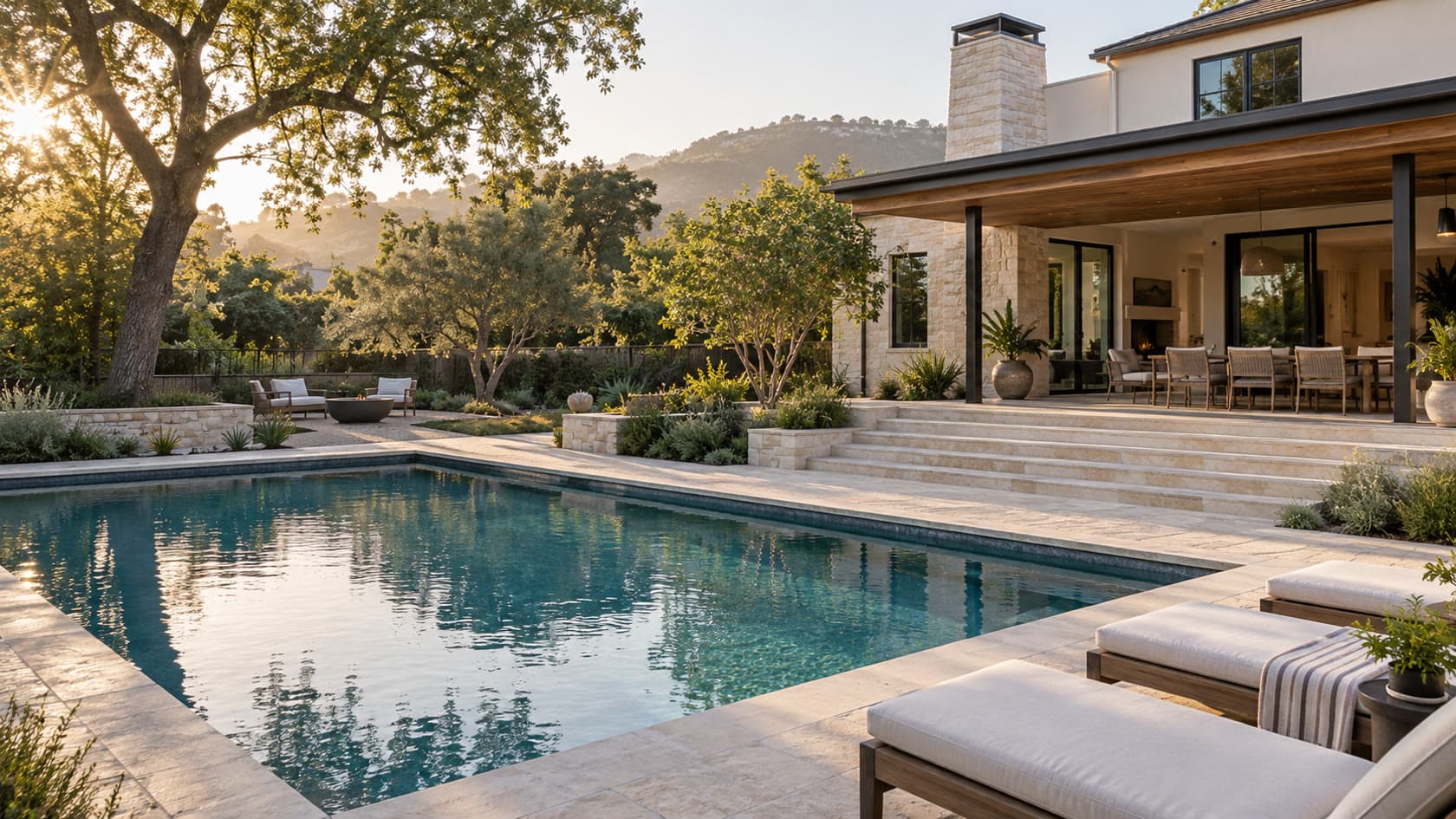
Describe how the pool will live
Start with use: everyday swimming, children, entertaining, exercise, visual calm, or a combination. Note the number of regular users and the parts of the year that matter most.
Map the property
Include a simple site sketch, access points, grade changes, utilities you know about, existing structures, and the area you hope to preserve. A brief should expose questions rather than pretend to solve engineering.
List decisions and unknowns
Separate fixed decisions from preferences and unresolved issues. This lets a builder explain how assumptions affect design, timing, and the eventual detailed scope.
Writing a pool project brief: common questions
How long should a brief be?+
One or two clear pages plus photos or a simple sketch is enough to begin a productive discussion.
Should I set a budget in the brief?+
You can share a planning range if it helps frame choices, while asking builders to explain what assumptions sit behind their detailed proposal.
Do I need plans first?+
That depends on local requirements and the builder’s process. A clear brief is useful before final drawings exist.
Official and specialist reading
Requirements vary by property and jurisdiction. Verify current rules with the authority responsible for the project.
- Pool & Hot Tub Alliance — consumer resourcesIndustry education and professional discovery resources.
- U.S. Consumer Product Safety Commission — pools and spasFederal consumer safety guidance.
Turn the reading into a project record
Capture the property facts once, then ask every shortlisted company to respond to the same brief and comparison structure.